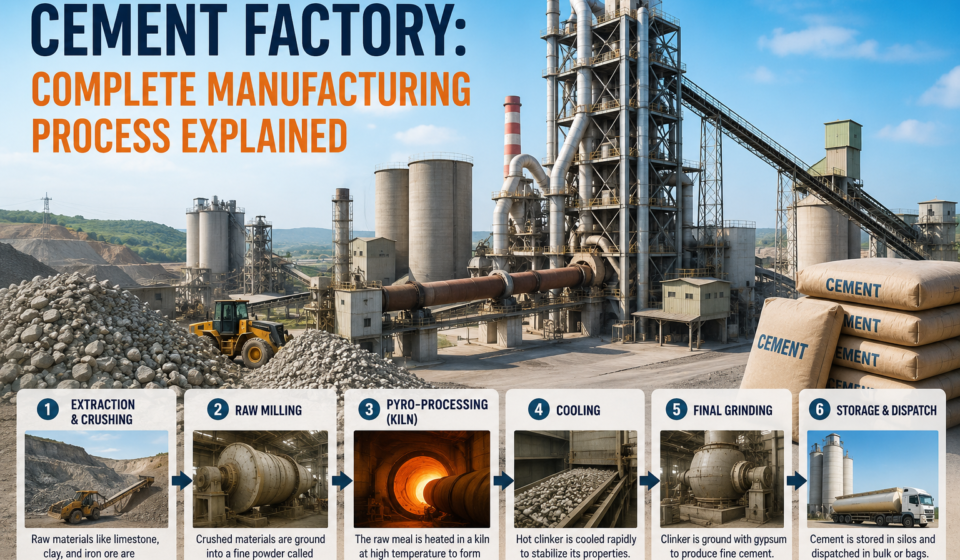

A cement factory is an industrial facility that turns raw materials such as limestone, iron ore, and clay into cement. Cement is an essential binding material that is used in global construction. Through processes such as grinding, heating, and extracting materials like limestone or clay, these facilities produce specialized products that form the foundation of modern infrastructure.
Cement is an indispensable building material used to construct houses, tunnels, bridges, and more. The history of cement-making began in 1904 in India. The first cement factory was set up in Madras, with production as low as 30 tonnes a day. The industry began in India in 1913.
The core manufacturing process of cement making!
The cement production process is highly controlled and energy-intensive, relying on chemical reactions. The fundamental stages of cement making are:
- Extraction and crushing
The primary raw materials are limestone, chalk, shale, and clay. It has been mined or transported to the plant. Giant crushers reduce rocks to gravel-sized pieces.
- Raw milling
The crushed rocks are combined with additives such as iron ore, sand, or bauxite to achieve the exact chemical composition required. Later, the mixture is ground into a fine, powdery substance known as raw metal.
- Pyro-processing phase
It is the heart of the cement factory. The raw meal is fed into a massive kiln, where it is heated to more than 1450 degrees Celsius. Later, the material undergoes calcination, which breaks it down to form an intermediate called clinker.
- Cooling or final grinding
During the phase, the hot clinker is cooled by forced air, which helps preserve its structural strength. Now, it has been transported to the finish mills, where it is converted into a microfine powder with a precise amount of gypsum, yielding the final product.
- Storage and dispatching
Once the cement is completely milled, it is conveyed into humidity-controlled storage silos. Later, the cement is packed into durable, moisture-resistant paper for smaller construction projects. Then it has been dispatched in bulk quantities using tanker trucks. Throughout the dispatching process, rigorous quality control checks ensure the products are of the highest quality and consistent.
- Environmental considerations
Because of the high heat and chemical reactions involved, cement factories produce significant carbon emissions. Nowadays, cement factories are investing heavily in environmental sustainability while using technologies that control pollution.
How to develop a cement factory business plan?
A good business plan is important for the successful manufacturing process.
- Market research and analysis
You need to start your market research to understand cement demand better. It helps you plan your business better.
- Business structure
You need to prepare a business structure to determine how a business will operate. Whether it is a sole proprietorship, a partnership or a corporation, you need to plan a structure for raw material handling and distribution.
- Manufacturing process
You need to choose the methods and technologies you will use for cement technologies. To run a successful business, you need to use advanced technology to make your processes more efficient.
- Financial plan
Prepare a well-funded plan for your business, whether through loans, investments, or grants. Also, consider revenue estimates and break even analysis.
Bottom line!
The cement manufacturing business is a great choice for those looking to start a business and is ready to invest time and money. Now that you understand the process well, you can create a plan that will make your business successful.