
Prehistoric Discovery of Copper:-
Around 6500 BCE, the old copper is found in North America. And it is one of the oldest known examples of copper extraction in the world.
Native copper earliest evidence derived from the excavation at Cayonu Tepesi in eastern Anatolia.
Timna valley is one of the world’s oldest known copper mines. It is known that the Plocnik archaeological site in Southeast Europe contains older evidence of copper making at high temperatures from 5000 BCE.
Copper smelting technology developed to the copper age which is known as the Chalcolithic age and then the Bronze Age. Without the smelting technology development, the bronze age would not be traced anyhow.
History –
Generally, a copper factory is also known as a copper refinery or a copper smelter. For Industrial purposes, pure copper extracts from raw ore or scrap.
19th century Revolution of Copper Mining:-
The evolution of copper mining introduced by Charles Saint Lambert around 1830 in Chile. At that time, the mood of transport was railroads and steam.
One of the chiles’s fundamental copper mines was Tamaya in 1850. Chile started supplying 18% of the copper produced globally in the 19th century and then Chile from 1850 to the 1870 was the world leading producer.
Key Stages of Copper Extraction:-
For copper refining, sulphuric acids are required. Apart from that, sulfuric acid is consumable for the copper extraction from oxides in the leaching process.
Arsenic is found as impurity in copper concentrates to enter smelting facilities. Over the years an excessive amount of arsenic in copper concentrate defines progressively depleted.
Mining and Concentration-
From the earth surface, copper ore is extracted. This ore contains a very low percentage of actual copper.
Copper is crushed and through the concentration process, impurities may be removed and leaving copper rich materials behind.
Smelting Process-
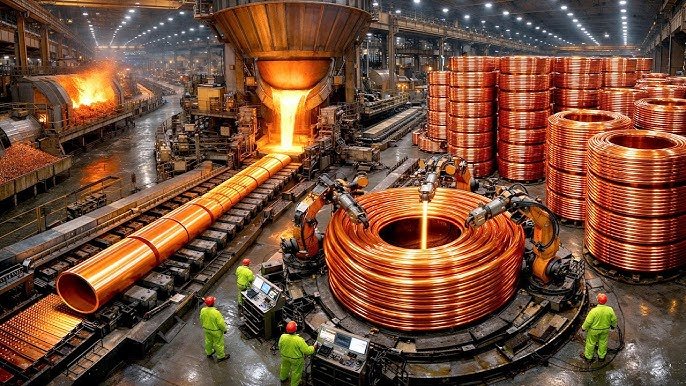
A blast furnace is required to smelt copper and oxidise the materials. And this concentration creates a molten mixture of copper and iron. After that, iron is removed and leaves 99% pure blister copper.
Refining-
Blister copper undergoes an electrolytic refining process and produces copper cathodes that are fully pure; this cathode may be cast into rods which are used for plumbing and electrical wiring.
Worldwide Production-
Although, the worldwide copper industry is highly demanding with vital smelters situated in China, Chile and India. In India, remarkable manufacturers include the government-owned Hindustan copper limited, Hindalco Industries from Gujarat and Sterlite Copper from Tamilnadu.
China earned over half of the world’s production capacity of copper. On the other hand, it is also known as the world’s largest consumer of refined copper.
The procedure of copper production is not simple and there are multiple stages to break down raw materials and get fine copper for finishing products made by copper.