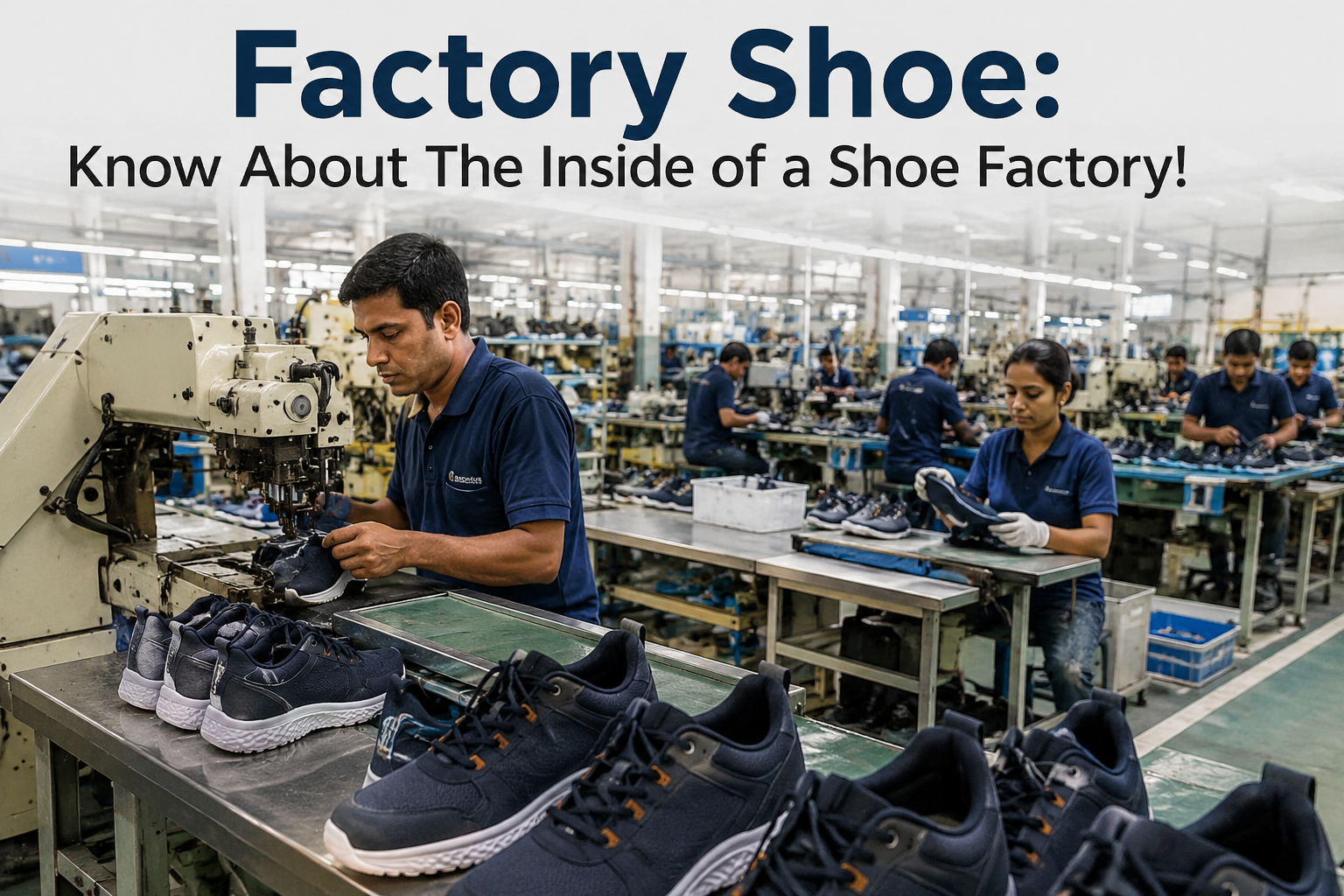

The process of shoe manufacturing is quite complex, mechanized, and assembly-driven, turning raw material into a wearable product. It combines modern engineering with craftsmanship to create footwear. The factory shoe operates on a distinct production line dedicated to design, cutting, stitching, assembly, and quality control, resulting in consistent quality and comfort.
If you ever wondered how your footwear is made, here is your answer. A good pair of shoes does not come with a single step. It is a long, multi-step process used for factory shoes.
-
Designing and pattern making
Before cutting any material, the shoe should be designed meticulously. The process starts with creating a design that accurately represents the foot’s shape and size. Designers use design tools to create visual concepts that are translated into flat patterns for various components. The pattern is used to cut material, ensuring each part fits together seamlessly.
- The shoe mould
A last is a 3D mould, traditionally carved from wood or sculpted from durable plastic. This 3D model represents the exact shape and volume of a human foot. The upper and lower parts of the shoe are wrapped around a mould to prepare for the final fit and structure.
- Cutting
Various raw materials, such as leather, canvas, or PU, are used in the factory to cut out various shoe parts using giant hydraulic presses and custom-shaped metal dies. The stage requires immense precision to maximise material use and avoid natural flaws in hides.
- Preparation and sewing
Once the cutting is done and the pieces are cut perfectly, the next step is to organise them and stitch them up to create shoes. Here, the process is divided: one worker sews the tongue of the shoe, another attaches the eyelets, and someone attaches the inner lining. The final step is to sew the strobe sock, which connects all the upper parts to enclose the foot bottom.
- Lasting with sole attachment
The stitched upper is pulled tightly over the plastic or wooden last. It is subjected to heat and pressure to mould the material to create the foot shape.
Later, the sole attachment process starts. The bottom of the last upper and outside are prepared with the adhesives and primers. Depending on the type of shoe, various methods, such as vulcanisation and cold cementing, are used to join the pieces together.
- Finishing and quality control
Once the shoe cools and the adhesive sets, the last is removed from the interior. The finishing process includes cleaning shoes, applying polishes, or applying waterproofing creams. Once the shoe is well prepared, a dedicated inspection team is present to identify anomalies. They check for structural defects and loose threads before boxing them for shipping.
Modern shoe manufacturing machinery is also improving over time, resulting in greater speed, consistency, and accuracy and creating uniform products.
Conclusion!
The factory shoe includes a complete journey from design to delivery. Every stage matters, from material selection to cutting and stitching. For buyers, the process helps in selecting the right footwear manufacturer. The right footwear process helps create products that are comfortable, market-ready, and durable.