Ittige Factory: A Brick-Making Factory With a Structured, Multi-Stage Production Process!!!

Ittige factory is a brick-making factory. The word ittige comes from Kannada and means “brick.” However, the factory is not just about the manufacturing of construction materials; it also represents centuries of tradition and craftsmanship alongside evolving technology. The Manufacturing unit produces everything from traditional red clay bricks to modern interlocking concrete blocks made from fly ash.
Know the inside of the traditional brick factory!
A traditional ittige factory operates in an intensive environment where raw material is transformed into finished products.
- Sourcing materials
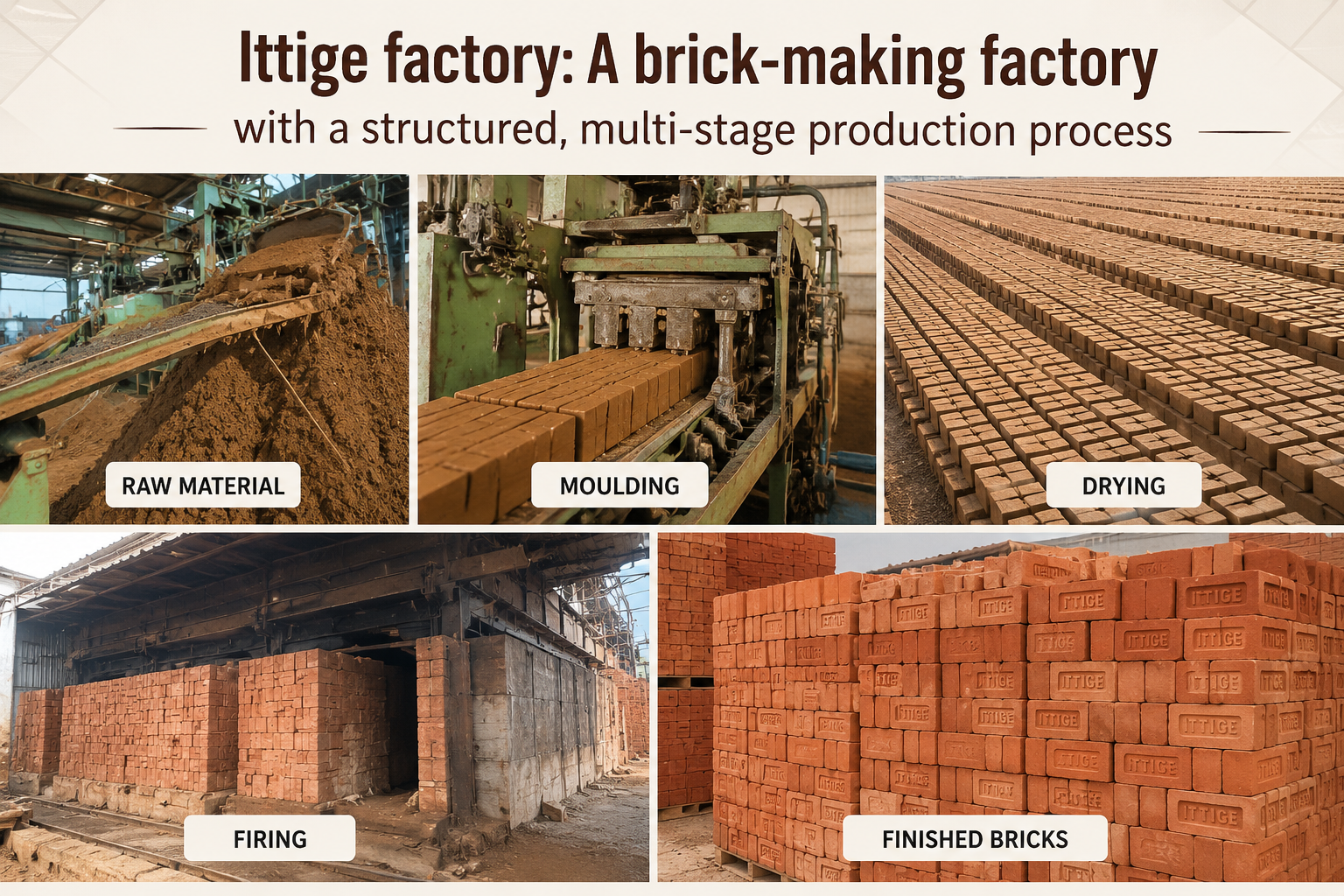
First of all, high-quality local clay is sourced. Later, it is mixed with water, sand and sometimes with ash. This helps in creating a moldable consistency.
- Moulding and extrusion
Later, the raw clay mixture is passed through the modern extrusion machines. This helps create a dense, uniform shape.
- Drying and baking
Now, this created uniform shape has been nearly stacked and air-dried under the sun. Later, they were placed in large industrial kilns. Then they have been baked at high temperatures, providing an iconic reddish or orange hue while maintaining the structural integrity.
- Quality control
Rigorous testing has been conducted to ensure that the bricks don’t crumble under heavy loads. They meet modern construction standards perfectly.
- Modern challenges and innovations
The traditional brick-making process is under scrutiny for its environmental impact.
Assess the local economic impact!
In Karnataka, Ittige factories are the crucial drivers. They provide reliable, year-round employment to many labourers, machine operators, and other drivers. Ittige factory has transitioned into producing interlocking pavement blocks. The facility is offering a diverse range of products and increasing profitability.
Know about the community and daily life in the factory!
Visiting a functional ittige plant reveals a perfect balance between mechanized mass production and human resourcefulness. Machine operators and workers handle day-to-day operations, from mixing raw materials to monitoring hydraulic processes, to produce consistent finished results. There are app-driven logistics and construction present in Bengaluru. Therefore, the factory is now linked to local transport and relocation services, supplying a diverse range of products directly to construction sites.
Traditional versus modern manufacturing!
In rural areas, ittige factories use labour-intensive and time-tested processes. Here, the clay is mixed with water, sand, and sometimes ash, moulded into rectangular shapes, and dried in the sun. Once dried, the raw bricks are prepared.
On the other hand, modern commercial ittige factories are using industrial corridors and advanced technologies such as wire-cut extrusion or automatic fly ash brick presses. Now, the manufacturing unit uses less clay. Fly ash bricks are created by combining fly ash from thermal power plants, sand, cement and water.
Conclusion!
An Ittige factory is not just a commercial warehouse, but it is a literal foundation of community development. Not only does it produce standard bricks for rural farmhouses, but it also provides a diverse range of other products, such as heavy-duty cement interlocking tiles and blocks for urban infrastructure. It reduces the waste and will remain an indispensable part of India. Over time, the industry is transitioning from small-scale unit to automated factory producing sustainable building materials.