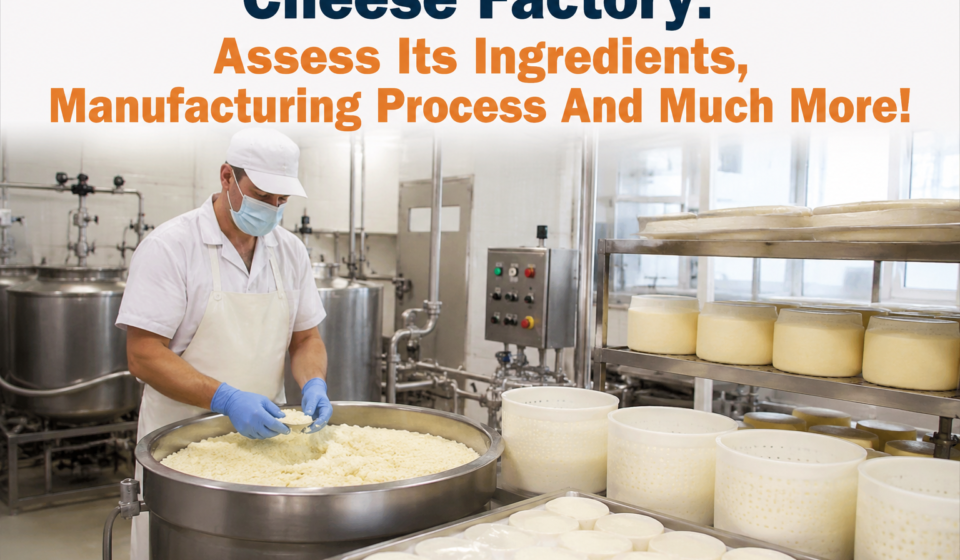

Cheese is not just all about food. It is a symbol of craftsmanship along with science. From the creamy smoothness of fresh mozzarella to the tangy bite of blue cheese, every variety tells a story of tradition and taste. A cheese factory turns raw milk into marketable cheese through processes such as pasteurization, fermentation, coagulation, and ageing. In this process, we will uncover the science behind the transformation of milk into cheese, which makes each type of cheese unique. Have a look at this breakdown of the cheese-making process.
Four main ingredients!
- Milk
Milk is the main ingredient of cheese. It can be sourced from cows, goats or sheep. Each milk type has its own unique flavour and texture. It results in the creation of the final product.
- Cultures
A friendly bacterium that initiates the cheese-making process converts lactose into lactic acid. The cultures help acidify the milk, resulting in a cheese with a distinct flavour and texture.
- Coagulant
It can be an acid or an enzyme that curdles the milk, helping in curd creation. It includes acetic acid, which is produced from both animal and microbial sources using different cheese-making methods.
- Salt
The ingredient is used for preservation and to improve flavour by drawing out moisture, thereby developing the cheese’s texture.
- Mold
To create different types of cheese, friendly mould is introduced, yielding various flavours and appearances, such as blue veins.
Manufacturing process!
- Milk reception and treatment
Raw milk is received into the factory. First, it has been tested for antibiotics and pathogens. It has been pasteurized to kill harmful bacteria. Later, it was standardized by separating the cream, which helps adjust the fat content.
- Coagulation
The process adds beneficial bacteria to ferment lactose into lactic acid, followed by enzymes such as rennet to coagulate the milk into a gel.
- Separation
The solid milk curds are cut and drained to separate them from the liquid whey.
- Pressing and shaping
Curds are pressed into specific moulds to expel remaining liquid. This results in the desired shape.
- Brining
The cheese blocks or wheels are submerged in a saltwater brine bath. This helps enhance flavour, resulting in the preservation of natural flavours.
- Aging
The cheese ripens at controlled temperatures and humidity, developing a distinct taste and aroma over weeks.
Industrial equipment you need to know!
These days, a modern cheese factory relies on automated, food-grade stainless steel machinery. The right cheese packaging solution and machinery are important for maintaining product quality and extending shelf life, thereby improving brand appeal.
- Pasteurizers
Heating treatment is continuously applied to milk.
- Cheese vats
Large, jacketed vats, perfectly equipped with agitators or cutting blades, enable the management of different processes, including coagulation and curd handling.
- Cheese presses
The equipment is used for pneumatic presses that evenly compact the curds into blocks.
- Packaging lines
The equipment uses automated vacuum sealing and atmosphere packaging to help extend shelf life against contamination. Cheese packaging plays a crucial role in maintaining cheese product quality and extending shelf life.
Conclusion!
A modern cheese factory is a perfect blend of traditional biological science and industrial engineering that transforms raw materials into various types of cheese and other nutrient-dense products. However, operating a diary processing facility requires compliance with rigid safety standards, such as the HACCP framework, antibiotic testing, and so on.