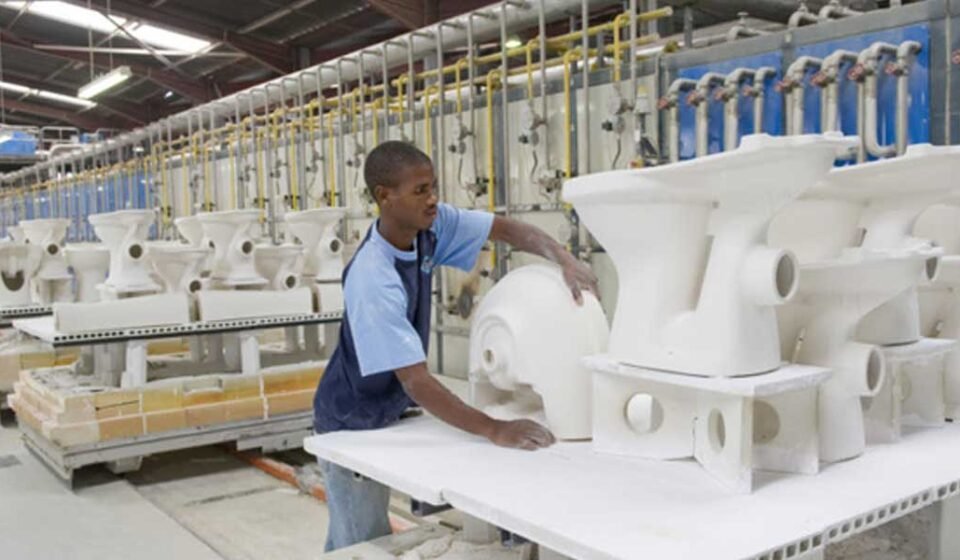

Ceramic Factory:-
The periodical ceramic history spans over 10,000 years, emerging from hand built Earthen in Mesopotamian China to automated worldwide facilities.
The Industrial Revolution allows modern specialized factories to produce the latest aerospace and electronics elements alongside traditional tableware. The Industrial Revolution shifted the craft into a large production.
Main Highlights in Ceramic Revolution:-
The Porters Wheel-
The discovery of the potter’s wheel was in Mesopotamia. This tool helped artisans to produce cylindrical and radial artifacts with high speed and uniformity. It emerged in around 3500 BCE.
Tang Dynasty-
The Tang dynasty’s timing was in between 618 CE to 907 CE. Chinese artisans invented the first fine, White porcelain. They used kaolin clay for firing at extreme heat.
16 Century-
Explorers and business entities brought porcelain from China to Europe. This triggered a race among artisans of Europe to repeat the formula, especially leading to famous manufacturing centres in Germany and stroke-on-Tent.
18th and 19th Century:-
The methodological purposes of the ceramic industry shifted it fully. Factories are the place where steam-powered slip casting, automated kilns and continuous assembly lines had been used.
In the 1858 era, D.C Majumdar set up the first advanced glazed Earthenware unit in Gwalior India.
Technical Modern Ceramics:-
After 18th century, ceramic components were designed especially for electrical insulation as well as domestic uses. After that, artisans found critical applications in thermal protection system and semi-conductor substrates.
Step by Step Ceramic Items Manufacturing:-
Substance Composition-
Generally, natural clays, quartz, sand and other substances are grinded into a fine powders and its combined with water and additives to make a consistent mixture of a liquid slurry.
Shaping and Formatting-
With the help of pottery wheel, artisans shaped clay and they used a rotating mold and automated blades for jiggering.
Under the extreme heat, dry or semi dry ceramic powders may be compressed to make a mold and it is useful for bricks and tiles.
Drying-
There is a name of shaped pieces such as greenware. Craftsman can dry shortly and it absorbs moisture and then it expanded. As a result, this piece of material causes cracking.
Firing-
if this material fully dried, artisans brought this pieces into a furnace or kiln for their first firing. Fast firing is known as bisque firing.
Glazing and Sintering-
These are the final stages of ceramic manufacturing process. Through spraying, a liquid coating must applied. The piece of materials goes into a final sintering process, under the temperature ranging from 1000 degree centigrade to 1500 degree centigrade.
Worldwide Production:-
In today’s digital Era, ceramic is categorized into traditional ceramics (tiles, bricks, sanitary ware and table ware) and advanced technical ceramics.
However, localized processing clusters like Khurja in Uttar Pradesh, India or Morbi in Gujarat bring an inevitable regional economy by combining old age craftsmanship with high industrial scale.