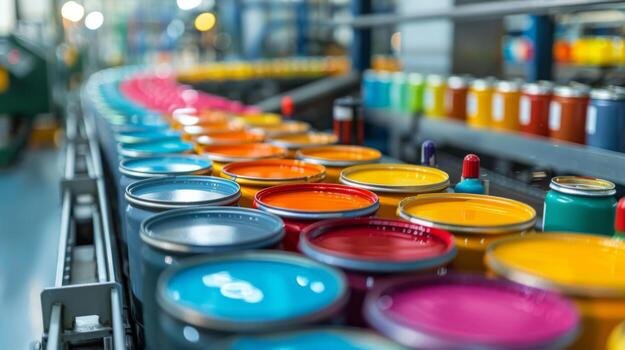

Paints History –
Around 50000 years ago, paints were used and it had been discovered in the caves of Southern Europe. For decorative purposes, Egyptians were recognised painting practitioners.
Around 8000 BC to 35000 BC, a diverse range of colours were utilized for the decoration of temples, houses , public buildings, and monuments. Most of the colours were mixed with the Egyptian soil.
In the year 1867 paints were recognised in the market. After that, the paint industry became a leading industry and it is known as the supply of raw materials and finished products.
Over time, the paint industry has received unique progress with various thousands of paints. Chemistry researchers discovered new paints.
Around 1000 BC, the Egyptian introduced a new material that came from the sap of acacia trees and this was known as vanish.
Indian Paint History:-
India developed the paint industry in 1902. A unit manufacturing paste, paints, distemper and treated oil were introduced.
The paint industry not only flourished in size but also these industries developed in the diverse range of products manufacturers.
Manufacturing various types of paint is the most complex matter. For numerous industrial purposes, anti-corrosive and anti-fouling chemical resistant agents were used.
In India, there were 15,000 workers in the paint manufacturing process and almost 100 crore capital had been fixed- as per annual survey of industry census.
In the small scale units, the reserved items of paints kept for exclusive development are as follows –
Dry Distempers
Red Lead Oxide
Aluminium Paints
Wagon Blocks
Graphite Paints
Paste Paints
Bituminous Paints
Paint production engages in mixing resins, pigments, solvents and additives into a meal base and grinding to disperse particles.
The remaining solvents are useful for consistency Street quality control testing and automated packaging.
The Fundamental Procedure of the Paint Production:-
Research chemists formulated a specific mixture for every batch. The main raw materials are given below-
Pigments-
Basically, pigment is one of the finest materials that provides colour, opacity and hiding powder. Titanium dioxide is used for whitening.
Resins-
Resins or binders are kept with pigments together and it has been used for the surface paint.
Solvents-
There are two types of solvents- like oil base paints and water base paints that can evaporate as the paint dyes.
Additives–
Additives are used for preventing foaming, molds and it helps to adjust drying times. It is a chemical to develop shelf life.
Quality Check and Testing:–
A sample proportion of paint is accessed in a laboratory before packaging and technicians check the paint viscosity and colour and gloss.
Viscosity-
Viscosity is the right thickness to prevent drips while applying.
Colour and Gloss –
With the help of spectrophotometer, batch’s undertone and masstone can be compared against pre-approved standards.
Opacity and Coverage–
Technicians test well so that the paint hides the surface underneath.