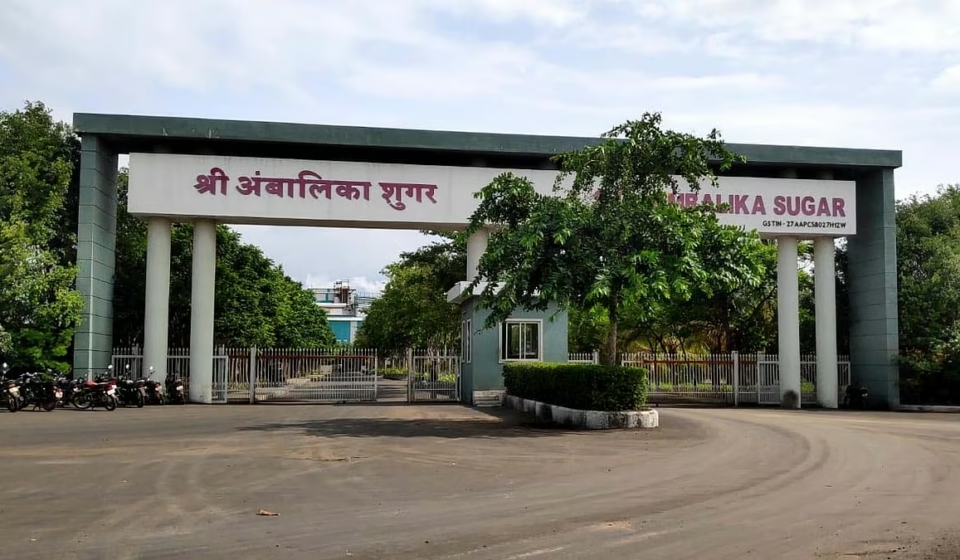

Shri Ambalika sugar factory was established in 2011. It is a huge modern sugar factory based in Karjat, Ahmednagar. The factory is operated with highly advanced technology integrating an agro-processing facility. As of today, the factory is a leading producer of EU-grade sugar and co-generated power.
An overview!
Ambalika sugar factory is a leading manufacturing plant in the state. Over the years, the factory has expanded significantly, with a crushing capacity of more than 15,000 tonnes of sugarcane per day (TCD). The facility is expanding significantly due to its agribusiness strategy. Actually, they are working closely with local farmers to procure high-yield cane, ensuring a consistent supply chain. Here, the sugar produced meets the strict European Union grade standard.
History and location!
The factory was founded on 11th May, 2011. Initially, it started as a single-vision technology company with a commitment to sustainable agriculture and the local farming community. The nearest major city is Karjat, which is 32KM away from the city centre and about 110KM from the headquarters of Ahilyanagar.
Integrated business model!
The company’s business model is a zero-waste philosophy, integrating a sugar factory with a distillery and bio-compost units. It means each part of sugarcane is utilised, which helps save energy and minimise waste.
- Distillery
The company has a distillery with a capacity of 400 KLPD, producing rectified spirit, extra-neutral alcohol, and absolute alcohol.
- Co-generation
The factory is operating at high efficiency, generating 56 megawatts of power.
Manufacturing process utilised by the facility!
The manufacturing process starts with raw sugarcane and ends with finished sugar crystals, involving multiple stages.
- Harvesting and crushing
First of all, fully grown sugarcane, which is 12 to 18 months old, is transported to the mill. The sugarcane is then shredded using machines to extract juice.
- Clarification
The raw juice contains impurities such as mud and natural fibres. Later, heat and lime are added to settle these impurities. Later, the clear juice is filtered.
- Evaporation
During evaporation, the clear juice is boiled in large evaporators to remove excess water. It results in thick or sweet syrup.
- Crystallization process
The syrup goes into crystallizers, where it is converted into tiny sugar crystals. When the syrup cools, sugar crystals are formed.
- Centrifugation
Later, the mixture is placed in a centrifuge to separate pure sugar crystals from the remaining liquid syrup.
- Drying and packaging
The white sugar crystals are dried and cooled. Later, it was packaged for market release.
Sustainable practices, economic impact and awards!
Ambalika sugar factory operates on a ‘Farmers first’ philosophy. The factory is working directly with thousands of growers, providing income to the rural economy. The facility is offering employment in milling and distillation. The facility is also providing indirect jobs to the sugarcane harvesters and transporters.
Conclusion!
Modern sugar factories, such as Ambalika Sugar Factory, focus entirely on sustainability while minimising water use. The facility is highly renowned for its strict environmental policies. Highly efficient, spend-washed boilers are preinstalled to achieve zero liquid discharge.
In the end, for its strong practices and success, the facility has won various prestigious awards, helping it maintain operational efficiency. The factory is widely recognised for maintaining high production standards while achieving significant financial success.